If you're running a small business in Saskatoon, you've probably noticed something: digital marketing advice is everywhere, but most of it feels like it was written for businesses in Toronto, Vancouver, or somewhere in California. Someone's telling you to "leverage omnichannel synergies" while you're just trying to figure out if Google Ads will actually bring customers through your door on a -35°C January morning.
Here's the truth, digital marketing for Saskatoon businesses isn't the same as digital marketing for anyone, anywhere. Our city moves at its own rhythm. Our customers have different expectations. And if you're trying to compete using the same playbook as a company in a market ten times our size, you're going to burn through your budget fast.
This guide is different. It's built specifically for small businesses operating right here in YXE, the contractors, retailers, service providers, and local spots that make this city what it is. We're going to break down exactly what works in 2026, why local expertise matters more than ever, and how to build a digital foundation that actually drives results without requiring a corporate marketing budget.
Why "Just Doing Marketing" Doesn't Cut It Anymore
Let's start with the biggest mistake we see: businesses treating digital marketing like a checklist of random tactics. They'll throw up a Facebook post here, maybe run some Google Ads there, and hope something sticks. It's the marketing equivalent of throwing frozen perogies at the wall.
The problem? None of it connects. Your Google Ads send people to a website that hasn't been updated since 2019. Your Facebook posts don't mention the same services your website does. When someone finally calls, you have no idea where they came from or what they were looking for.
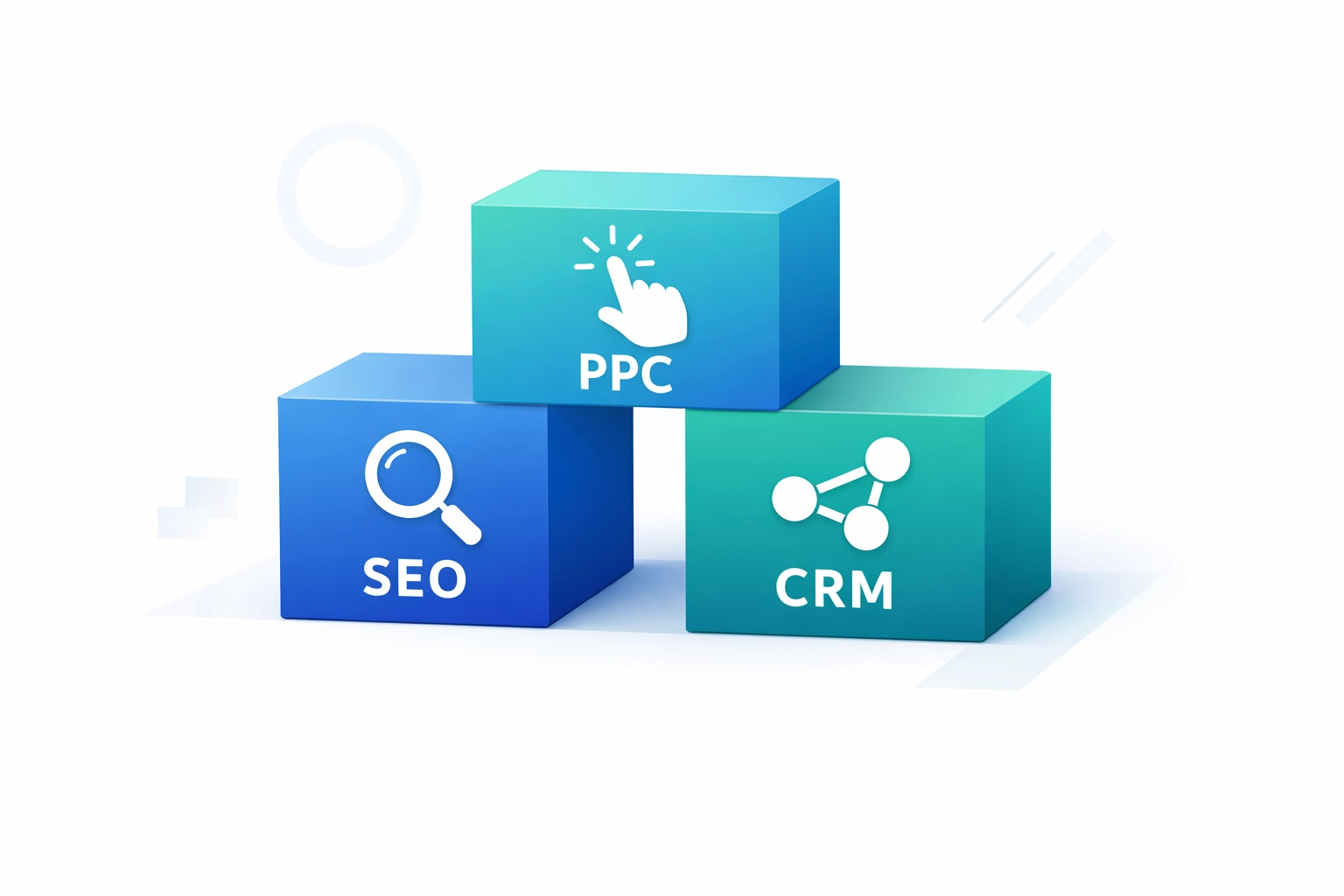
This is where having a digital foundation becomes essential. Think of it like building a house, you need a solid base before you start worrying about the paint colour. Your digital foundation includes three core elements:
Search Engine Optimization (SEO): Making sure people can actually find you when they search for what you do. Not just "plumber" but "emergency plumber near Sutherland" or "HVAC repair in Saskatoon's north end."
Pay-Per-Click Advertising (PPC): Strategic ads that put you in front of customers actively looking for your services, structured to minimize waste and maximize qualified leads.
Customer Relationship Management (CRM): A system that tracks where leads come from, what they need, and ensures you're following up effectively. Because getting the lead is only half the battle, closing it is where the money's made.
These three elements work together. Your SEO brings in organic traffic over time. Your PPC captures high-intent searchers right now. Your CRM ensures you don't lose opportunities because someone forgot to call back. It's a system, not a collection of random tactics.
The Local Advantage: What International Agencies Can't Fake
Here's something you need to understand about the digital marketing industry in 2026: it's filled with agencies that claim they can help businesses "anywhere." They've got teams spread across multiple time zones, standardized processes, and slick presentations.
But they don't know Saskatoon.
They can't tell you how the Fringe Festival in August brings a completely different crowd to Broadway than the Jazz Festival does in June. They don't understand that when the Exhibition rolls around, half your target customers are going to be occupied for a week straight. They've never driven down 8th Street at rush hour or tried to park near the Capitol Music Club on 1st Ave North on a Friday night.
That local knowledge matters more than you think. When we're building a digital strategy for a Saskatoon business, we're considering things like:
-
Seasonal patterns that are unique to our climate: Your Google Ads strategy in February (when everyone's furnace is on the fritz) should look different than September (when people are thinking about getting their heating systems checked before winter hits).
-
Local events and community touchpoints: If you're a restaurant or entertainment venue, you need to be showing up in searches around Jazz Fest, the Fringe, Taste of Saskatchewan, and even SaskTel Saskatchewan Jazz Festival. These aren't just "nice to mention", they're when people are actively searching for what to do, where to eat, and how to spend their weekend.
-
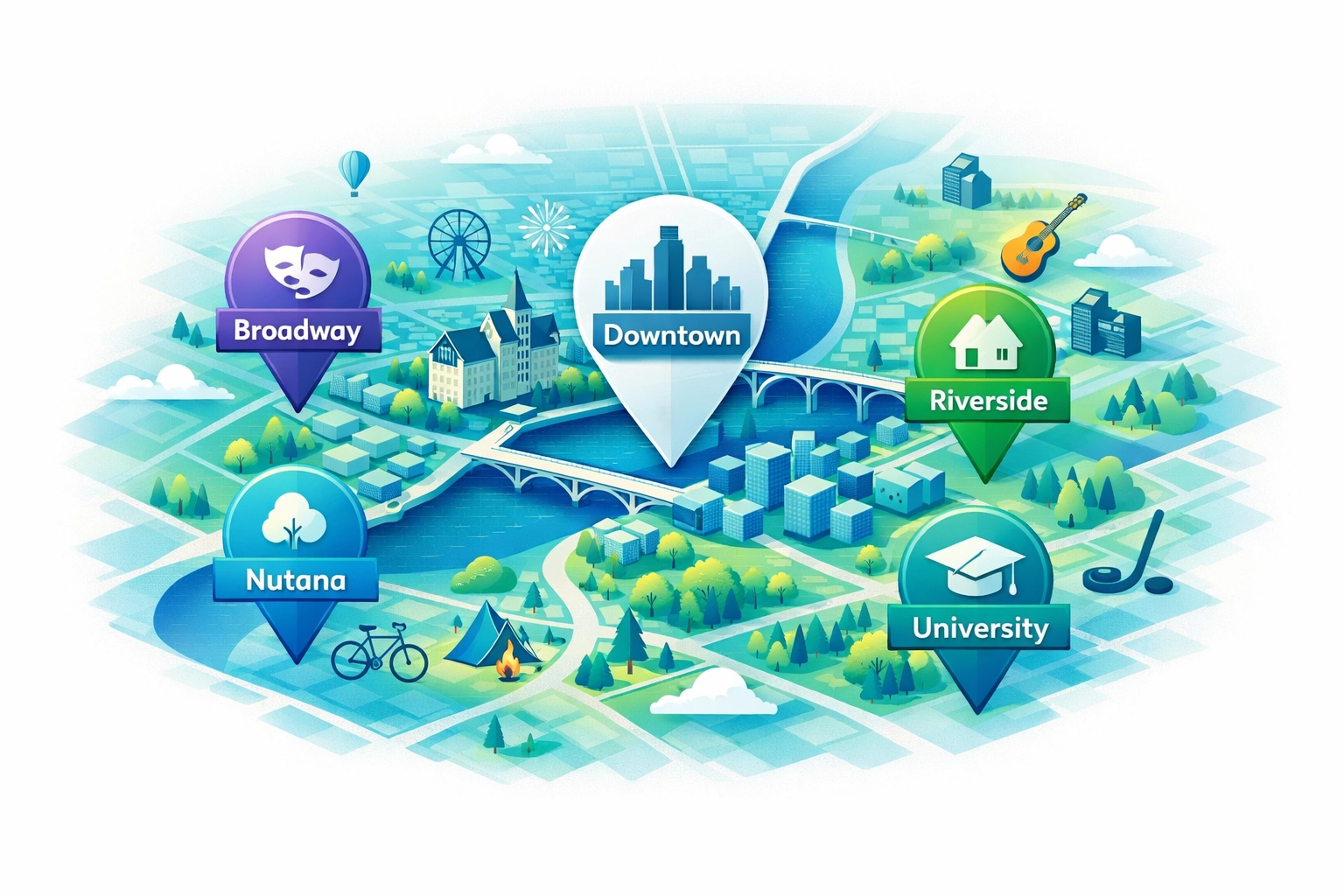
Neighbourhood-specific targeting: Someone searching for a contractor in Lakeview has different priorities than someone in Willowgrove or Nutana. We can target messaging, budget, and even ad creative based on these micro-markets.
-
The actual geography of service areas: Understanding that "Saskatoon" to many businesses actually means Saskatoon, Warman, Martensville, and sometimes Langham or Dalmeny. Your Google Business Profile needs to reflect that reality.
An international agency will never understand why your business slows down during the long weekend in May or why you need to adjust your messaging when the university students return in September. That's not a criticism, it's just reality. They're optimizing for scalability, not for the specific rhythms of life along the South Saskatchewan River.
Your Google Business Profile: The Foundation of Local Visibility
If you take nothing else from this guide, take this: your Google Business Profile is the single most important piece of digital real estate you own. Not your website. Not your Facebook page. Your GBP.
Why? Because when someone in Saskatoon searches for what you do, Google shows them a map with three local businesses before they ever see regular search results. If you're not in those three spots (the "Local Pack"), you're invisible to a huge portion of potential customers.
Here's how to optimize your Google Business Profile for maximum visibility in Saskatoon:
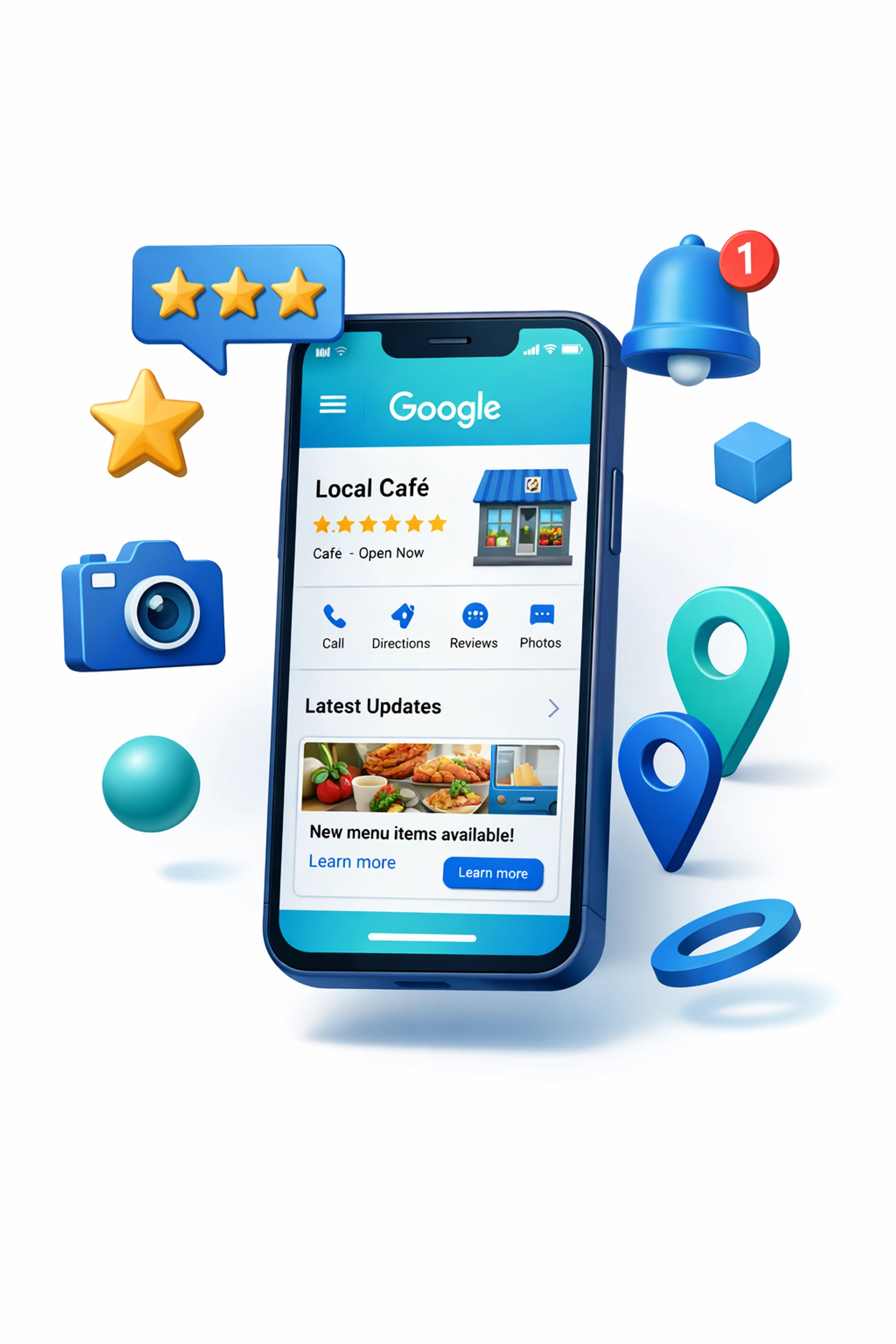
Complete every single field. Business name, address, phone number, website, hours, services, attributes, all of it. Google rewards complete profiles. If you're a restaurant, add your menu. If you're a contractor, list every service you offer. The more information, the better.
Update it monthly. Google wants to see that your business is active and engaged. Add photos regularly (weekly if you can manage it). Post updates about promotions, new services, or upcoming events. Even a simple "We're open this long weekend" post shows Google your profile is actively managed.
Get reviews, then respond to them. Every single one. Thank people for positive reviews. Address concerns in negative reviews professionally. Google looks at both the quantity and recency of reviews when deciding who shows up in the Local Pack.
Use location-specific service areas. If you serve multiple neighbourhoods in Saskatoon or surrounding areas, make sure that's reflected. Don't just say "Saskatoon", list Warman, Martensville, and any other areas you cover.
Add posts around local events. When the Fringe is happening, post about it. When Jazz Fest rolls around, mention it. This signals to Google that you're connected to the local community, which strengthens your local relevance signals.
The businesses that dominate local search in Saskatoon aren't necessarily the biggest or the oldest. They're the ones treating their Google Business Profile as a living, breathing marketing asset that gets updated, optimized, and managed consistently.
Building Your SEO Strategy for Saskatoon Searches
Local SEO is different than traditional SEO. You're not trying to rank for "best coffee shop in Canada." You're trying to rank for "coffee shop near Broadway Saskatoon" or "coffee shop open late Saskatoon downtown."
This requires a different approach:
Think in questions, not keywords. In 2026, people are searching conversationally. They're asking Google, "Where can I get my furnace repaired in Saskatoon?" or "Best brunch spots near the Delta Bessborough?" Your content needs to answer those specific questions.
Create neighbourhood-specific content. If you serve multiple areas, create dedicated pages for each. "Plumbing Services in Stonebridge" performs better than a generic "Saskatoon Plumbing" page because it's more relevant to the searcher.
Leverage local landmarks and events. When you're creating content, weave in references to local spots. Instead of "our downtown location," say "our location near the Capitol Music Club on 20th Street." Instead of generic seasonal content, tie it to specific Saskatoon events and rhythms.
Get links from other local businesses and organizations. A link from the Saskatoon Chamber of Commerce or a local community association carries more local SEO weight than a link from a random directory in another province.
Make your site mobile-first. The majority of local searches happen on mobile devices, often while people are literally standing outside trying to figure out where to go. If your site loads slowly or doesn't work well on phones, you're losing customers right at the point of decision.
One thing we see constantly: businesses with technically sound websites that just don't convert. The site loads fast, looks professional, but somehow the phone doesn't ring. Usually, it's because the content doesn't speak to local customers. It's generic, could apply to any business anywhere.
Compare "We provide quality HVAC services with 24/7 emergency support" to "When your furnace quits at 2 AM in a Saskatoon February, we answer the phone and get someone to your door, whether you're in River Heights or out in Warman."
Which one makes you feel like the business understands your situation?
Social Media That Actually Works for Saskatoon Businesses
Let's be honest: most small business social media is pretty bad. Random posts about holidays nobody cares about, stock photos that could be from anywhere, and captions that sound like they were written by a robot learning human language.
Here's what actually works in 2026:
Short-form video is king. TikToks, Instagram Reels, YouTube Shorts, they generate nearly three times the engagement of long-form content. You don't need fancy equipment. Pull out your phone, answer a common customer question in 30 seconds, and post it.
For contractors: show before-and-after work, explain common problems, give DIY tips for small issues (yes, even if they could theoretically do it themselves, you're building trust).
For retailers: product demonstrations, behind-the-scenes content, customer testimonials, "day in the life" stuff.
For restaurants and venues: food prep, signature dishes, event highlights, crowd vibes.
Choose one platform and own it. Don't try to be everywhere. If your customers are on Facebook, focus there. If you're targeting younger demographics, Instagram or TikTok makes more sense. The Capitol Music Club, one of our clients, does this really well, they're consistent on Instagram with event promotion, artist spotlights, and venue atmosphere content that makes people want to show up on Friday night.
Post consistently, not constantly. One good post per week beats seven mediocre ones. Quality and consistency both matter, but forced frequency just leads to burnout and content that feels obligatory rather than engaging.
Include clear calls-to-action. Every post should have a purpose. "DM us for a quote." "Book your table through the link in bio." "Share this with someone who needs to see it." Tell people what to do next.
Engage with other local businesses. Tag them, share their content, create partnerships. When the Fringe posts about performers coming to town, engage with that content if it's relevant to your business. Social media is actually social, the businesses that understand that community aspect perform better.
Google Ads: Getting Immediate Visibility (Without Burning Money)
SEO is a long-term play. You're building authority and visibility that compounds over time. But what if you need customers now?
That's where Google Ads comes in. When structured correctly, PPC advertising puts you in front of high-intent searchers, people actively looking for what you offer, and you only pay when they click.
The key phrase there is "when structured correctly." Here's how Saskatoon businesses should approach Google Ads in 2026:
Start with highly specific, high-intent keywords. Don't bid on "plumber." Bid on "emergency plumber Saskatoon," "burst pipe repair Saskatoon," "24 hour plumber near me." The more specific the search, the higher the intent, and the better your conversion rate.
Use location targeting strategically. If you only serve Saskatoon and surrounding areas, don't waste budget showing ads to people in Regina or Prince Albert. Tight geographic targeting ensures every dollar goes toward potential customers who can actually use your services.
Write ads that speak to local customers. "Saskatoon's Most Trusted Furnace Repair, Serving River Heights, Sutherland & Beyond Since 2010" performs better than "Professional HVAC Services Available Now."
Send people to relevant landing pages. If your ad is about emergency plumbing, the landing page should be about emergency plumbing, not your generic homepage. The more aligned the message, the better your conversion rate and the lower your cost per lead.
Track everything. This is where CRM integration becomes critical. You need to know which keywords and ads are generating actual customers, not just clicks. Without that data, you're flying blind.
One mistake we see constantly: businesses run Google Ads, get clicks, but can't tell you what their cost per customer is. They know their cost per click, but not whether those clicks turned into phone calls, form submissions, or actual jobs. That's not marketing, that's gambling.
The Saskatoon Event Calendar: Marketing Opportunities You Can't Miss
Our city has a rhythm, and smart businesses align their marketing with it. Here's how to think about Saskatoon's major events from a digital marketing perspective:
Winter (January-March): Focus on service-based searches. People are dealing with frozen pipes, furnace issues, and cabin fever. If you're a service provider, this is prime time for emergency-focused messaging. If you're retail or hospitality, target the "we need to get out of the house" sentiment.
Spring (April-May): Home improvement season kicks off. Contractors should be ramping up Google Ads targeting homeowners planning renovations. Retailers should be highlighting outdoor and garden products. The long weekend is a major event, plan around it.
Summer (June-August): Festival season. Jazz Fest, the Fringe, Taste of Saskatchewan, the Ex. If you're anywhere near downtown or event venues, adjust your messaging to capture event-goers. The Capitol Music Club absolutely crushes it during this time by promoting their shows alongside festival schedules.
Fall (September-October): Students return, which means a shift in downtown foot traffic. Homeowners are thinking about winter prep. Service businesses should be promoting maintenance and inspection services before the cold hits.
Holiday Season (November-December): Shopping season for retail, party season for hospitality and entertainment. Don't just throw up generic holiday messaging, get specific about what makes your business the right choice for local customers.
The businesses that plan their digital marketing around this calendar, adjusting ad budgets, content topics, and messaging to match what's actually happening in Saskatoon, consistently outperform those running the same campaign year-round.

Why Your Website Needs to Do More Than "Look Nice"
We need to talk about websites. Too many Saskatoon businesses have sites that look good but don't actually generate business. They're digital brochures, pretty, but not functional.
Your website in 2026 needs to:
Load fast. Google has made page speed a ranking factor. More importantly, users bounce if your site takes more than a few seconds to load. Especially on mobile, especially when someone's searching on the go.
Make it stupid-easy to contact you. Your phone number should be clickable (so mobile users can tap to call). Your contact form should be simple, name, email, phone, brief message. If you're asking for twelve fields of information, you're losing customers.
Answer the questions people actually ask. "How much does it cost?" "Do you serve my area?" "How quickly can you get here?" "What makes you different?" If your website doesn't address these upfront, people will click back and call your competitor instead.
Show social proof. Reviews, testimonials, case studies, photos of real work, whatever proves you're legitimate and capable. Stock photos of generic handshakes don't cut it. Show real projects, real customers, real results.
Work on mobile devices. Over 60% of local searches happen on mobile. If your site doesn't work perfectly on phones, you're losing the majority of potential customers.
If you built your website on a DIY platform three years ago and it's not generating leads, it's probably not just the platform, it's that the site wasn't designed with conversion in mind. Looking professional is table stakes. Converting visitors into customers is the actual goal.
CRM: The Unsexy Tool That Changes Everything
Nobody gets excited about Customer Relationship Management systems. It's not sexy. It's not creative. But it's the difference between businesses that grow and businesses that stay stuck.
Here's what a good CRM does for a Saskatoon small business:
Tracks where every lead comes from. That phone call, did it come from Google Ads, organic search, Facebook, or a referral? Without knowing, you can't make smart decisions about where to invest your marketing budget.
Ensures follow-up happens. How many potential customers have called you, left a voicemail, and never heard back because someone forgot or got busy? A CRM makes sure every lead gets followed up properly.
Builds customer history. When someone calls for the third time, you should know about the previous two interactions. CRM systems keep all that information in one place.
Identifies patterns. Which services are most profitable? What time of year do certain types of customers contact you? Which marketing channels bring in the best customers? Your CRM data tells you all of this.
The businesses that implement even basic CRM systems see immediate improvements in conversion rates, not because the marketing got better, but because the follow-through got better. You can spend thousands on ads bringing people to your website, but if you're not systematically capturing and following up with those leads, you're hemorrhaging money.
Building Your 2026 Digital Marketing Foundation
If you're reading this thinking "okay, this all makes sense, but where do I actually start?" here's the priority order for Saskatoon small businesses:
Start with Google Business Profile optimization. This is free, high-impact, and something you can do yourself this week. Fill out every field, add photos, start asking for reviews.
Ensure your website is functional. It doesn't need to be fancy, but it needs to work well on mobile, load quickly, and make it easy for people to contact you. If your current site fails these tests, it's time for an upgrade.
Implement basic tracking. At minimum, install Google Analytics and set up conversion tracking. You need to know where traffic is coming from and what actions people take on your site.
Choose one paid channel to test. For most Saskatoon businesses, that's Google Ads with highly targeted local keywords. Start small, measure results, and scale what works.
Build a simple CRM process. Even if it's just a spreadsheet tracking where leads come from and follow-up status, that's better than nothing. As you grow, you can implement more sophisticated systems.
Commit to consistent content. Pick a frequency you can actually maintain: whether that's one blog post per month or two social media posts per week: and stick to it. Consistency beats intensity.
The businesses winning at digital marketing in Saskatoon aren't doing anything magical. They're doing the fundamentals consistently, tracking their results, and adjusting based on what actually works in this market.

Why Local Expertise Matters More Than Ever
Here's what we've learned working with Saskatoon businesses over the years: generic digital marketing advice is everywhere, but results come from understanding the specific context you're operating in.
An agency in Vancouver can tell you to "optimize for mobile" and "create engaging content." What they can't tell you is that your target customers in Stonebridge have different search behaviors than customers in Sutherland. They can't advise you on whether to increase your Google Ads budget during the Exhibition or dial it back because your targets are all occupied. They don't know that mentioning the Delta Bessborough as a landmark helps local customers immediately place your business.
When we work with businesses like the Capitol Music Club, we're not just building a generic entertainment venue marketing strategy. We're factoring in the downtown and north-end music scene, the competition from other downtown venues, the seasonal patterns of the Saskatoon live music scene, and how to position them as the go-to spot for both locals and people visiting for events.
That's what local expertise looks like. It's not about knowing some secret trick. It's about understanding context deeply enough that every decision: from keyword selection to ad scheduling to content topics: is informed by actual knowledge of the market.
Your Next Steps
Digital marketing in 2026 isn't about doing everything. It's about building a strong foundation, understanding your local market, and executing consistently on the things that actually drive results.
The Saskatoon businesses that are thriving aren't the ones with the biggest budgets or the flashiest campaigns. They're the ones who understand their customers, show up consistently in the right places, and provide clear reasons for people to choose them over competitors.
If you're ready to build a digital marketing foundation that actually works for your Saskatoon business: not just in theory, but in practice: let's talk. We're local, we understand this market, and we're focused on results that matter: more customers, more revenue, more growth.
Because at the end of the day, digital marketing is only valuable if it drives real business results. Everything else is just noise.